
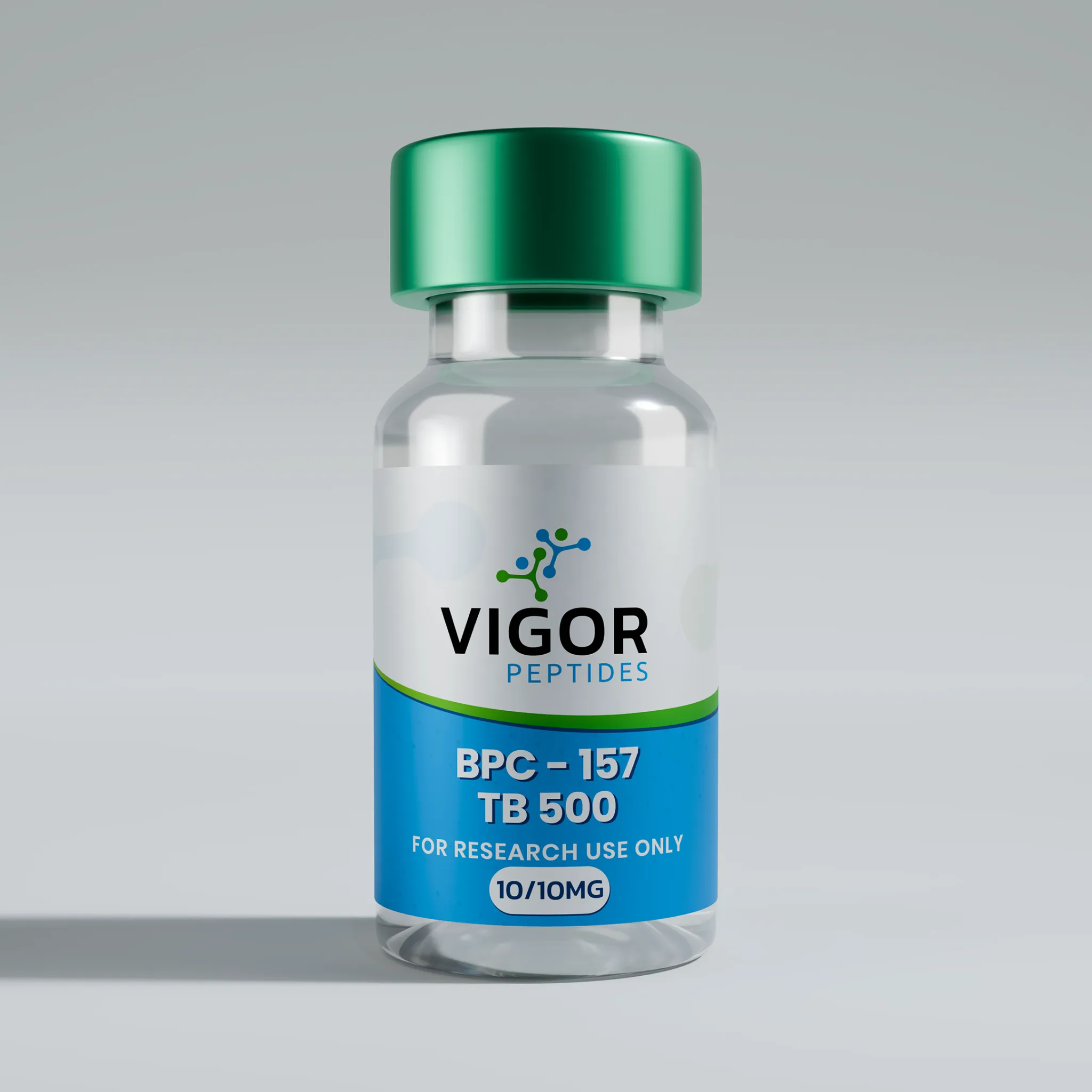
Buy BPC-157 / TB-500 Peptide Blend – 20mg
$129.00
This premium peptide blend combines BPC-157 (10mg) and TB-500 (10mg), two extensively researched compounds commonly studied together in connective tissue, recovery, and inflammation-related research models.
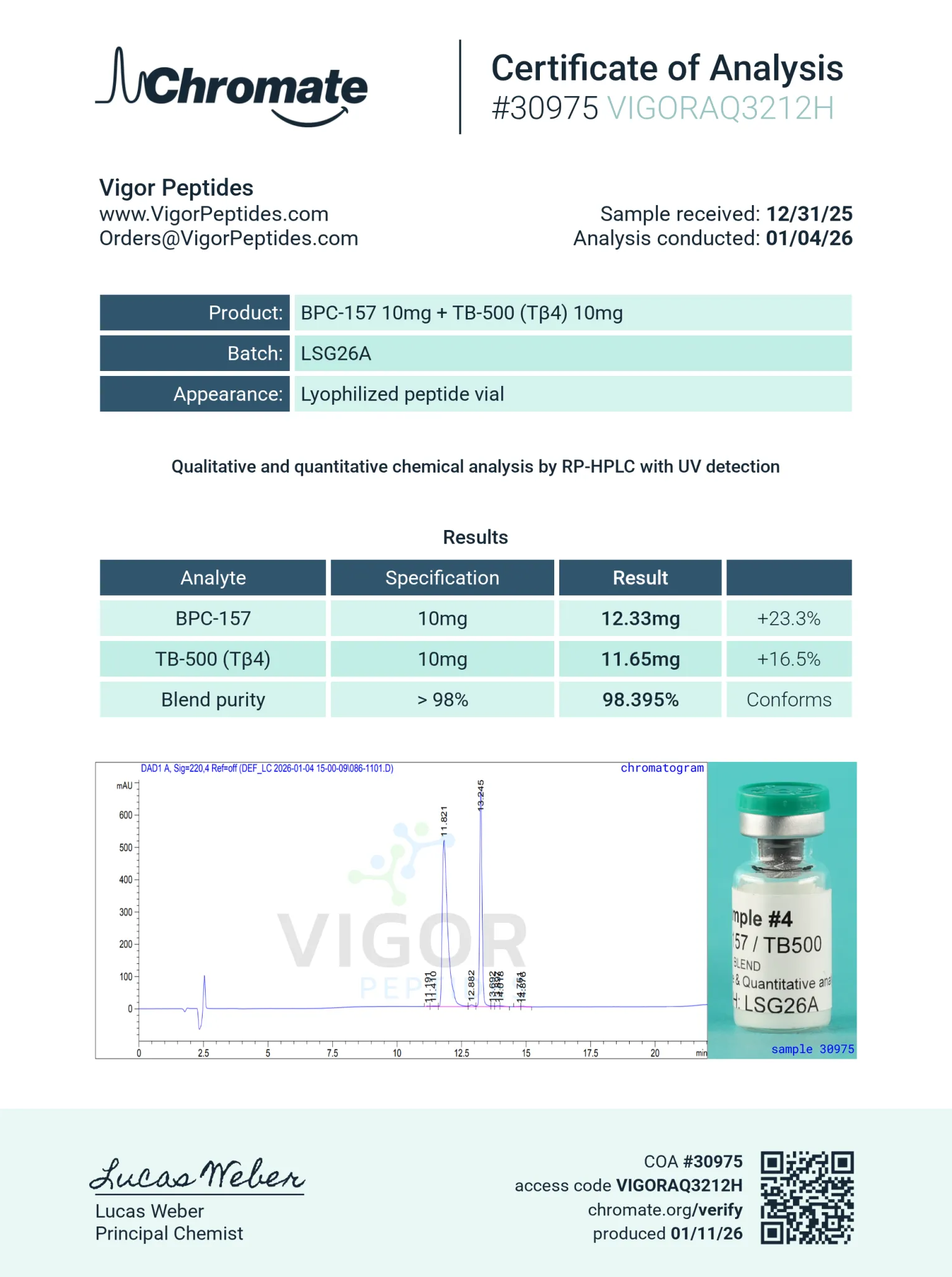
• 3rd-party lab tested with verified COA
• In stock and ready to ship
Note: All peptides are sold in lyophilized form for laboratory research purposes only.
What is BPC-157 / TB-500 Peptide Blend?
The BPC-157 / TB-500 Peptide Blend combines two widely studied research peptides in a single, pre-measured vial: BPC-157 and TB-500. By uniting these compounds, this blend provides a streamlined platform for laboratories exploring soft tissue repair, cellular signaling, and inflammation-related pathways.
Because both peptides frequently appear together in regenerative and connective tissue research, this blend offers consistency and convenience for controlled studies. Researchers seeking where to buy BPC-157 / TB-500 peptide will find that Vigor Peptides provides full transparency, including third-party testing, an imprinted batch number on every vial, and a posted Certificate of Analysis (COA).
This ready-measured formulation reduces variability and simplifies study design for teams focused on recovery and tissue integrity models.
How Does BPC-157 / TB-500 Blend Work in Research?
This blend combines two peptides with complementary research roles:
-
TB-500 (Thymosin Beta-4) – Cellular Migration & Recovery
TB-500 is studied for its involvement in cell migration, angiogenesis, and soft tissue recovery. Laboratories often examine it in muscle, tendon, and wound-healing models due to its role in tissue remodeling.
-
BPC-157 (Body Protection Compound-157) – Inflammation & Connective Tissue
Researchers investigate BPC-157 for its role in connective tissue integrity, vascular stability, and inflammation balance. It frequently appears in tendon, ligament, and gastrointestinal research models, where structural resilience is a key focus.
Why These Peptides Are Studied Together
- Enhances Soft Tissue Repair –TB-500 supports cellular migration and remodeling, while BPC-157 contributes to tissue stability and structural support. Together, they create a comprehensive framework for connective tissue research.
- Supports Inflammation Balance – BPC-157 is frequently studied for inflammation modulation, complementing TB-500’s role in recovery-focused pathways.
- Streamlines Regenerative Models – By combining two commonly paired peptides into one formulation, this blend reduces preparation steps and improves consistency across experimental conditions.
As a result, researchers can explore overlapping regenerative mechanisms without managing multiple separate compounds.
Disclaimer
While the known research on these molecules appear promising, it is important to note that additional studies are necessary to fully understand their potential and efficacy. We offer this blend strictly for research use only, and it is not intended for human consumption or therapeutic use.
Any reference to or inference of results from human trials is provided solely for contextual reference and educational purposes. This information does not imply that we recommend or endorse the use of these or any peptides for experiments in human or veterinary studies OR outside of a controlled laboratory setting.
What Does the Research Show?
A. Connective Tissue and Structural Support
Preclinical research frequently highlights both BPC-157 and TB-500 in models involving tendon, ligament, and muscle tissue. Studies examine accelerated repair processes, cellular migration, and improved structural organization.
B. Inflammation Modulation
BPC-157 plays a significant role in inflammation-related pathways and vascular stability. When paired with TB-500, researchers can observe broader recovery dynamics and tissue resilience in experimental systems.
C. Cellular Recovery and Angiogenesis
TB-500 is consistently associated with angiogenesis and cellular movement. In combination with BPC-157, the blend supports multi-layered evaluation of healing and recovery processes.
Therefore, this formulation is well suited for laboratories studying recovery, regeneration, and inflammation balance.
Summary:
BPC-157 / TB-500 Peptide Blend delivers a focused, ready-to-use research formulation designed to simplify connective tissue and recovery studies. By combining two extensively researched peptides into one precise blend, it eliminates the need for individual measurement and mixing.
First, TB-500 supports cellular migration and tissue remodeling. Then, BPC-157 contributes inflammation balance and structural stability. Together, they create a synergistic research model that extends beyond what either peptide offers alone.
Because the blend is pre-measured, it offers both convenience and consistency. As a result, it is ideal for laboratories conducting soft tissue, recovery, and regenerative research.
In conclusion, this blend is a streamlined research tool built to support reproducible results with maximum efficiency.
Reviews
There are no reviews yet.